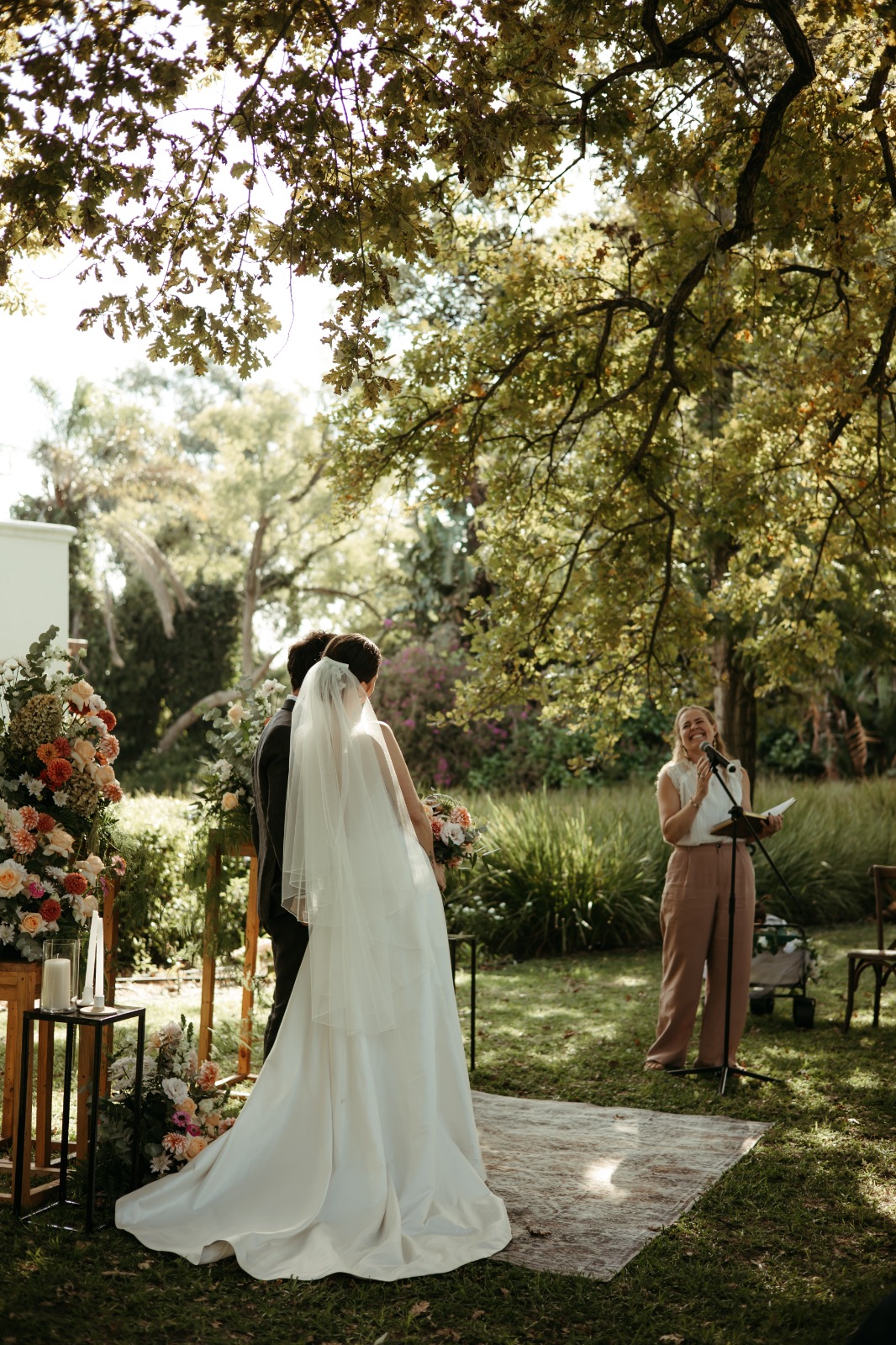
How to get married in Cape Town: everything you need to know
Paperwork, timing, marriage officers and the parts nobody explains — a plain-language guide to marrying in the Western Cape.
By Caroline Grewar-Brinkhoff
Auf Deutsch lesen →
Cape Town is one of the most beautiful places in the world to say yes — and one of the easiest to overthink. Between Home Affairs appointments, venue deposits and a season that books out a year ahead, the admin can quietly take over the part that matters most: the ceremony itself. This guide walks through the whole thing in order, so you can make decisions once and then go back to being engaged.
1. Decide what kind of ceremony you want first
Almost every planning decision flows from one question: do you want a legal ceremony, a symbolic one, or both? A legal ceremony is registered under South African law and must be led by a registered marriage officer. A symbolic ceremony carries no legal weight — many couples handle the signing quietly at home or at a separate appointment, then celebrate in Cape Town exactly the way they want. Neither is more 'real' than the other. One is administration; the other is meaning.
2. Understand who can legally marry you
In South Africa, a marriage can only be solemnised by a designated marriage officer. That includes Home Affairs officials and religious ministers who hold designation, as well as a growing number of independent celebrants who are registered marriage officers. If a legal ceremony matters to you, confirm designation in writing before you book — it is the single most common gap couples discover too late.
3. Get your documents in order early
- Valid passports or South African IDs for both partners
- Unabridged birth certificates (often requested for international couples)
- A letter of no impediment from your home country if you are marrying from abroad
- Divorce decree or death certificate of a former spouse, where applicable
- Certified translations for any document not in English
Requirements can vary by country of origin and can change, so verify the current list with the Department of Home Affairs or your celebrant before you book flights. Give yourself months, not weeks — international documents are the slowest moving part of any Cape Town wedding.
4. Pick your season with your eyes open
Peak season runs roughly October to April: long light, warm evenings, and the famous south-easter that can turn a cliff-top ceremony into an endurance sport. Shoulder months are quieter, greener and often more affordable, and winter light in the Winelands is extraordinary for photography. Whatever you choose, always have a genuine wind-and-rain plan you would be happy to actually use.
5. Book the ceremony before the extras
Couples routinely book a venue, a photographer and a florist before they think about who will lead the day. It is worth flipping that order. Your celebrant shapes the twenty minutes everyone remembers — and the good ones limit how many weddings they take each season, precisely because every script is written from scratch.
You will forget the napkin colour. You will not forget how it felt to stand there and hear your own story told back to you.
6. Build the ceremony around you
A modern ceremony has no fixed template. It can hold hand-written vows, a family ritual, two languages, a moment of silence for someone missing, or nothing but the truth said plainly. The work of a celebrant is to interview you properly, then structure all of that into something that flows — warm where it should be warm, short where it should be short.
Where to start
Search by your wedding date to see which celebrants on Wedding Union Cape Town are genuinely free that day, read a few profiles, and send two or three enquiries. You are not choosing a supplier — you are choosing the person who will hold the most personal moment of your life.
Find your celebrant
Search by your wedding date and see who is genuinely available on the day.